
Showing posts with label designers. Show all posts
Showing posts with label designers. Show all posts
Friday, 20 September 2013
happiness is...
I've been really enjoying catching up on some of the Creative Mornings Melbourne video series, so I thought I'd mention another recent one that provided me with quite a bit of food for thought. Designer/Illustrator and 'multi-disciplinary' maestro, Beci Orpin, spoke about happiness and creativity in this lovely video.
Beci speaks with lots of examples from her life about what keeps her happy, and links this all very closely to her ability to maintain a work life driven by design. She mentions the following happiness points important to her:
+ her sketchbooks
+ making mistakes
+ riding her bike
+ breaking the rules
+ having her cats around
+ diversity
+ finding inspiration
+ community
+ running your own race
Two things I found quite wonderful to hear her speak about were 1. making mistakes, and 2. running your own race. Beci shares a very honest tale of what she feels was probably a business 'mistake' earlier on in her designer career. I found it refreshing to hear how she viewed this and the learning she drew from it. It would be easy to write something like this off as a failure and dwell on it unproductively for ages. Instead, she used the experience to figure out what she is better at and used this to propel her forward into other design adventures.
The second point, about running your own race, was communicated simply, but holds a powerful message. Beci talks about not getting caught up in what your creative peers are doing and measuring your progress against this. Feeling envious, jaded or ripped off 'is a really big waste of energy', she says. Which is so true when you think about it. And turning your thinking around to see it like this totally changes your perspective from being a negative one to being positive. So run your own race is her main message here.
What brings you happiness in your creative world? Enjoy the video!

Tuesday, 4 December 2012
artists in conversation
I'm in love with a book I'm reading and think you might like it too. In many ways it encapsulates my dream job: interviewing artists and designers about their practice over many decades.
'Artists in Conversation' by Australian journalist Janet Hawley has just been published and is well worth a read.

Hawley interviews many interesting (mostly Australian) artists and presents the book as a series of essays about each one. As this review points out "Spanning continents and decades, Artists in Conversation brings to life
the creative talents of more than 30 artists including Brett Whiteley,
Ben Quilty, Margaret Olley, Bill Henson, John Brack, Sidney Nolan,
Arthur Boyd, Adam Cullen, John Wolseley, John Olsen and Albert Tucker,
among others."
I've read about 7 chapters so far and was moved to tears by one in particular where Hawley reprints letters between the then dying Lloyd Rees and Brett Whiteley. So poignant.
What's quite special about this collection of artist portraits is the way in which Hawley has developed quite intimate friendships with each of them over long periods of time. Often holidaying with the artists and their families, and always being invited for studio visits and meals and long, interesting, thoroughly-worth-reading conversations. She has the inside scoop on what plagues them, what stirs and motivates them and what fame has meant for their lives and their creative work.
You can listen to an interview with Janet about her book here recorded 15 November on ABC Radio National Books and Arts Daily.
Fascinating, I tell you!
Dream job indeed. So I'm putting it out there. I'm available to do this kind of project for printmakers if anyone has funding. Just saying.....
Friday, 15 July 2011
thoughts on technology + artists
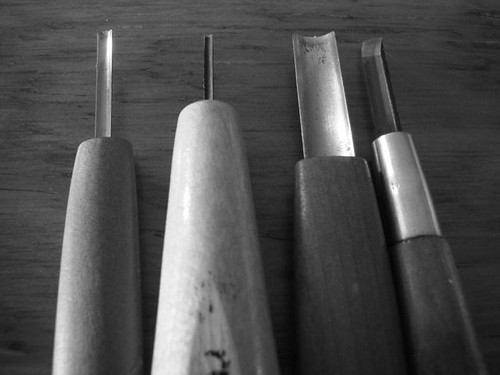
I've just finished reading a very good essay about change and technology and the publishing industry by Christina Thompson (editor of the print version of the Harvard Review). It's in the current edition of my favourite journal, Meanjin which is still only really available as a print journal (and that's ok with me).
The essay was a great read because it raises lots of interesting questions about the skill set writers need now and for the future, skills you wouldn't usually associate with writing literature like the ability to use photoshop and design web pages. This is because the publishing industry is changing rapidly and the way writers interact with it is changing too. Thompson talks a lot about the need for writers to embrace the technological skills needed as it will enable them to have more control and therefore more say in their working lives. Things like being able to design a website rather than give it to someone else to do for you because if writers don't develop this skill they won't be able to maintain and update their web presence independently of a third party. And to not be able to do so is disempowering.
Even though the essay is about the publishing industry I think there are a lot of parallels that can be made in terms of technology and the future for artists/designers. Those of us who have an active web presence already have a whole lot of skills that creative folk wouldn't have had 10 years ago (and many still don't have today). A lot of us don't even think about the technological skills we have mastered in recent years. For example, I'm a printmaker (and a pretty low tech one at that as my area is relief printing) but because I've been interacting on the web for almost 6 years now I know how to maintain a blog on the two main blogging platforms out there (and a lot of bells and whistles that go with it like inserting videos and sound files), use image storing sites like flickr, maintain an online shop, set up and maintain a basic website, use twitter, use a digital camera, use photoshop, and the list goes on. My point is I didn't know any of this stuff up until 6 years ago. And it's not the skill set you would usually associate with a printmaker. But because I've chosen to interact online and have an active web presence I have accumulated these skills along the way and now people are seeing them as valuable, and some even as necessary (like Thompson) to work in our contemporary culture.
Interestingly, I now also use this skill set in my main income earning job. Up until recently these kinds of skills weren't really necessary there either but more and more in many different types of jobs it's becoming necessary to get across the technology that is very much a part of modern life in western societies.
And I think it's very important that artists and designer do this. It's a bit like the point Thompson makes in her essay about writers. "We also need to remind young would-be literary types that it's not going to be enough in the future simply to be good with words. If they want to be players in the world of publishing they had better become proficient in a few of these technologies so that they really understand how to take advantage of the changes that are taking place" (p 54). And so it is with artists and designers too. I have friends who are painters and continue to slog away interacting with the traditional gallery world. The disappointment and frustration is endless for them. I keep telling them they need to build a web presence and interact with others online. That it's not enough anymore to just do things the old way. That there's a whole world out there beyond the local gallery shows where people can see their work and where they can make valuable connections. I don't think they can appreciate the value in that just yet. But hopefully soon they will.
In the meantime those of us who are used to interacting online will continue to accumulate technological skills that will be useful in a whole range of contexts and will help us feel more connected to other artists and designers all over the world. Now that, in my mind, is very empowering.
Monday, 11 April 2011
how do you identify?
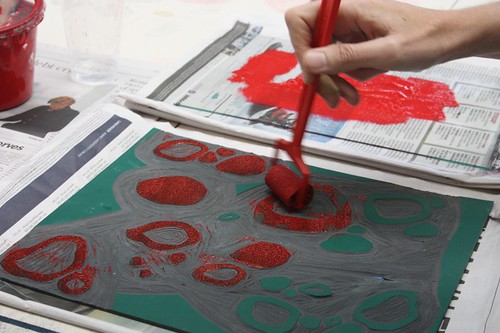
photo credit: Emma Byrnes
As I said a few posts ago I'm reading a whole of lot of stuff these days, most of it interesting, some of it mindblowing, and a little bit of it taking me off on small but pleasant tangents.
Recently I have been reading and thinking about artists, designers, makers and identity. Yes, that old curly chestnut. Things like where, how and when does identity form for artists and designers, and does it happen in formal situations (like an art degree) or does a lot of it happen informally (or both)? What goes on in the heads of artists and designers as we think about and form our creative identities? Does it happen quickly or evolve over time (a life time)? Does it happen in a torturous, painful manner? Or does it in fact happen with ease and confidence for some? Do key people influence this development? And does it help if there is someone mentoring us through the process of claiming of an identity as artist and/or designer? What does the support needed to claim a creative identity look like? And what are the key issues we battle with in claiming this identity (family expectations & pressures, financial pressures, popular images of artists/designers, cultural and/or gender expectations)?
Believe it or not there is hardly anything written on this topic. Lots out there about corporate identity, branding, marketing and identity, that kind of thing, but not about the stuff I've listed above.
I warned you my head has been rattling on this topic!
Anything to share on this or any answers to these questions to offer?
And in terms of your creative-maker self, how do you identify?
Subscribe to:
Posts (Atom)


